


Walk into any academy before the 6am class and half the room is holding a coffee. Caffeine is the most used performance aid in grappling by a mile, and most people are using it on autopilot. Right dose, right timing, and it sharpens your rolls. Wrong timing, and you're staring at the ceiling at 1am wondering why you can't sleep after training.
Here's how to actually use it.
What caffeine does for your rolls
Caffeine blocks adenosine, the chemical that builds up in your brain and makes you feel tired. That's the short version. On the mats it shows up as better alertness, faster reaction time, and a lower sense of effort. Hard rounds feel a little less hard.
Research suggests caffeine also helps with strength endurance and repeated high effort work, which is basically what a night of six minute rounds is. It won't add anything to your technique. It just lets you access what you already have when you'd otherwise be flat.
One thing it's genuinely good for that nobody talks about enough: training on bad sleep. If the baby was up all night or work ran late, caffeine covers a real portion of the performance you lose from a short night. It's a patch, not a fix. But it's a good patch.
How much caffeine before BJJ actually helps
The research range is about 3 to 6 mg per kg of bodyweight, taken 30 to 60 minutes before training. For an 80kg grappler that's 240 to 480mg. Honestly, most people don't need the top of that range and shouldn't go near it.
Practical version. A regular cup of coffee runs 90 to 120mg. Start with one cup, or 100 to 200mg total, about 45 minutes before you step on the mats. If you feel jittery, your grips are shaky, or your first round feels frantic instead of sharp, you took too much. More caffeine past a moderate dose doesn't keep adding performance. It just adds side effects.
And if you already drink coffee all day, know that your tolerance blunts the effect. The people who get the most out of a pre training coffee are the ones who don't sit at 400mg a day as a baseline.
Evening classes are where it goes wrong
Here's the problem. Most people train at night, and caffeine has a half life of roughly 5 to 6 hours. Take 200mg at 6pm for a 7pm class and you've still got around 100mg in your system at midnight. That's a third of a cup of coffee sitting in your bloodstream while you're trying to fall asleep.
You might still fall asleep. Caffeine is sneaky like that. But research suggests it cuts into deep sleep even when you don't notice it, and deep sleep is where the physical repair happens. We covered why that matters in sleep and BJJ recovery. Trading tonight's recovery for one sharper training session is a bad deal if you're doing it five nights a week.
The rule that works: no caffeine within 8 hours of bed. Train at 7pm and go to bed at 11? Your cutoff is around 3pm. If you need something for the evening class, eat properly beforehand, which does more than people think. What you put in your body earlier in the day matters more, and we broke that down in what to eat before BJJ.
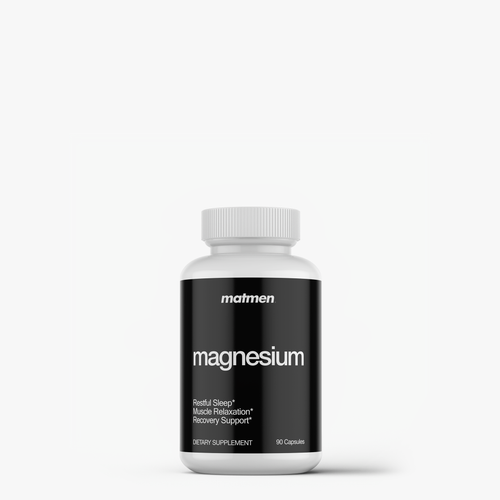
If evening caffeine has already wrecked your wind down routine, Magnesium Glycinate before bed supports the relaxation side of the equation. It's not a sedative and it won't cancel out a 6pm espresso. Nothing does. Fix the timing first.
Does coffee cancel out creatine
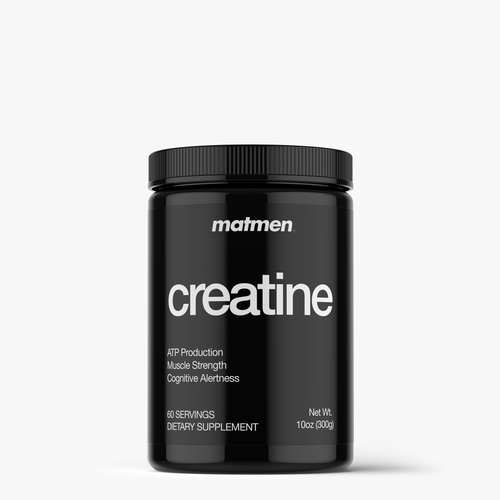
You'll hear this one in every gym. The short answer is no. The idea came from one small study decades ago that never held up, and plenty of athletes have taken Creatine Monohydrate alongside daily coffee with completely normal results. Creatine saturates your muscles over weeks. Caffeine works acutely, session by session. They're doing different jobs on different timelines, and they don't fight each other.
Take your creatine whenever it's consistent, coffee or no coffee.
When to skip it
A few situations where caffeine works against you.
During a hard weight cut, caffeine on an empty stomach and low water makes you feel worse, not better, and it can mask how depleted you actually are. Competition morning, be careful going above your normal dose. Nerves already have your heart rate up, and stacking a double espresso on top of adrenaline is how people gas in round one. Use the same dose you've tested in training. Never try a new pre workout on comp day.
And if you're relying on caffeine to get through every single session, that's not a caffeine strategy. That's a sleep problem, an overtraining problem, or a food problem wearing a coffee costume. Fix the real thing.
The simple protocol
Morning or midday training: 100 to 200mg, about 45 minutes out. Evening training: caffeine before 3pm only, fuel with food instead, and protect your sleep like it's part of your training. Because it is.
This article is for informational purposes only and is not medical advice. Talk to a healthcare professional before changing your supplement routine.