


Nobody warns you about the hips. You expect sore fingers and a stiff neck when you start training. Then a year in, you stand up after a long guard session and your hips feel like they belong to someone twice your age. Hip pain from BJJ is one of the most common complaints on the mats, and it sneaks up slower than a knee or shoulder problem, which is exactly why so many grapplers ignore it until it starts stealing rounds.
Here's what's actually going on, and what you can do about it.
Why BJJ is so hard on your hips
Think about what your hips do in a single round. Closed guard asks them to squeeze and hold flexion for minutes at a time. Playing open guard means constant deep external rotation. Butterfly hooks, triangle attempts, inverting to save a position, shrimping down the mat during warmups. Few sports ask the hip joint to work through that much range under that much load, that often.
Then add the rest of your life. Most of us sit for eight hours before training. Sitting keeps the hip flexors short and the glutes quiet, so you show up to class with hips that are already tight and then demand maximum range from them. Something has to give.
Common sources of hip pain from grappling
Most hip pain from grappling comes from a few usual suspects. Hip flexor strains show up as a pinch or ache at the front of the hip, usually after a lot of closed guard or heavy takedown entries. Deep, achy pain in the groin after forced rotation, like getting stacked in guard or cranking a deep half sweep, points at the joint itself getting irritated. Pain on the outside of the hip that flares when you lie on that side often traces back to cranky glute tendons doing work the bigger muscles skipped.
Which one you have matters less than what you do next. Almost all of them respond to the same basic plan. Calm the irritation down, restore the motion, and get stronger through the range the sport demands.
What helps hip pain between sessions
First move: cut the volume before you cut the training. Drop a day of hard rolling and swap in drilling or positional work that doesn't poke the sore spot. Guard players with angry hips can spend a week on top. Passing rounds are still training.
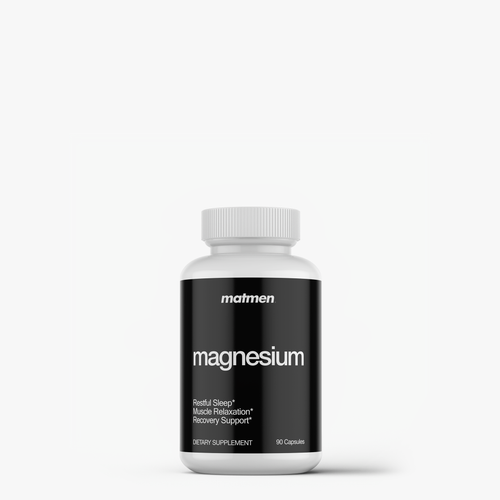
Second, feed recovery instead of just resting. Soreness and stiffness after hard sessions are normal, and you can support how your body handles them. Curcumin and ginger have a long history of use for supporting joint comfort, which is why Turmeric + Ginger is the first bottle we point grapplers to when joints are the complaint. The EPA and DHA in Omega-3 support a healthy inflammatory response over the long haul, and hips are exactly the kind of slow burn problem where consistency pays. Don't skip the boring stuff either. Sleep is when tissue rebuilds, and Magnesium Glycinate supports muscle relaxation and deeper sleep, which matters when tight hips are partly a nervous system holding pattern.
Third, move the joint every day. Not aggressive stretching. Gentle, frequent range of motion. Hip circles in the morning, 90/90 switches while you watch tape, a couch stretch after a long day in a chair. If you want a full plan, our daily BJJ mobility routine covers the hips in about 15 minutes.
Build hips that can take the sport
Mobility without strength is just range you can get hurt in. The grapplers whose hips hold up for decades tend to be strong in positions everyone else avoids. Split squats and lunges build the front of the hip. Glute bridges and single leg deadlifts wake up the back side. Copenhagen planks and wide stance work make the groin resilient, and the groin is where a lot of guard players eventually break down.
Two short sessions a week is enough. This is not a bodybuilding program. It's insurance for the joint that does more work in this sport than almost any other.
Strong hips also protect what sits above and below them. When the hips move well, the lower back stops compensating. If your back has been talking to you too, we broke that down in our lower back pain guide.
When to stop pushing through
Most hip soreness fades in a week or two with sensible management. Some of it doesn't. Sharp pinching deep in the groin every time you flex the hip, clicking or catching that comes with pain, night pain that wakes you up, or pain that keeps getting worse despite rest are all reasons to see someone qualified. A sports physio who understands grappling is worth every dollar here. Getting a real answer early beats guessing for six months while the problem digs in.
Your hips carry your whole game. Guard, takedowns, top pressure, all of it runs through that joint. Work the range daily, get strong in the ugly positions, support your recovery, and don't let a small ache turn into the thing that rewrites how you roll.
This article is for informational purposes only and is not medical advice. Talk to a qualified health professional about your specific situation.