


Somebody at your gym is taking a nitric oxide booster right now. Maybe it's a pre workout with a pump blend, maybe it's a plain arginine bottle they grabbed because a lifting buddy swore by it. Nitric oxide supplements are everywhere in combat sports, and most of the guys taking them can't tell you what nitric oxide actually is. Let's fix that, because the real story is more useful than the marketing version.
What nitric oxide actually does
Nitric oxide is a gas your body makes on its own. It's a signaling molecule, which means it tells other tissues what to do. Its biggest job is telling the smooth muscle in your blood vessel walls to relax. When those walls relax, the vessel widens, and more blood moves through. That's vasodilation.
More blood flow means more oxygen and nutrients reaching working muscle, and faster clearing of the waste products that build up during hard rounds. That's why nitric oxide gets so much attention from athletes. The "pump" you feel after a hard grip session is this exact process in action. Blood is moving into the muscle faster than it's leaving.
You can't take nitric oxide itself. It's a gas with a lifespan measured in seconds. What you can take are the raw materials your body uses to make it. That's where supplements come in.
Where nitric oxide supplements fit
Almost every nitric oxide product on the market is built around one idea: give the body more of the amino acids it converts into nitric oxide. The main one is L-arginine. Your body runs arginine through an enzyme called nitric oxide synthase, and nitric oxide is the product. More substrate in, more output available when your body calls for it.
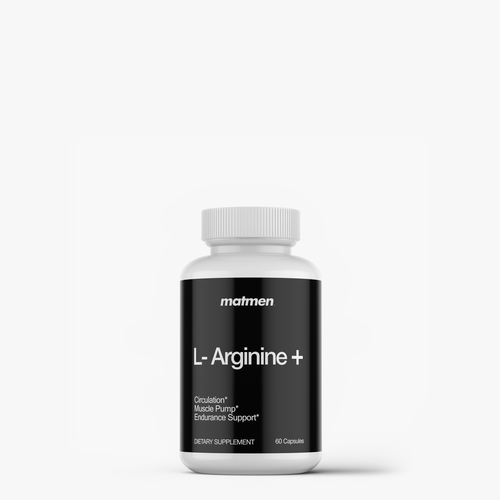
That's the reason L-Arginine + exists in our lineup. It's not a stimulant and it's not a pre workout in the energy sense. It supports the pathway your body already uses to regulate blood flow. We covered the athlete case for it in more depth in our earlier post on L-arginine for athletes, so here we'll stay focused on the nitric oxide side.
Research suggests arginine supplementation supports nitric oxide production and healthy circulation, with the clearest effects showing up during exercise, when demand for blood flow is highest. It is not a magic switch. If your diet, sleep, and conditioning are a mess, no pump ingredient is going to hide that.
The citrulline wrinkle
If you've read supplement forums, you've seen the argument that citrulline raises blood arginine better than arginine itself, because arginine gets partly broken down in the gut and liver before it reaches circulation. There's truth in that, and it's why a lot of pre workouts lean on citrulline malate.
Here's the practical take. Both feed the same pathway. Dose and timing matter more than picking the perfect molecule. Arginine taken away from big meals, especially before training or before bed, still does its job. And arginine brings a couple of extras citrulline doesn't, including its role in creatine synthesis and growth hormone signaling that researchers have been poking at for years.
What better blood flow means on the mats
Grappling is interval work in disguise. You squeeze, you explode, you hold isometric positions that choke off blood flow to your own forearms, then you get a few seconds to recover and do it again. The athletes who recover between exchanges win the late rounds.
Blood flow is the delivery system for that recovery. Oxygen in, metabolic byproducts out. Anything that supports vasodilation is supporting the exact process that lets your grips come back between exchanges and lets your legs feel alive in round five instead of filled with concrete.
That's also why the pump matters beyond looking full in a rash guard. A muscle that's well perfused during training is getting fed. Over months, that supports the quality of your training, and training quality is what actually moves your jiu-jitsu.
How to use it without wasting money
Keep it simple. Take arginine on an emptier stomach, since it competes with other amino acids for absorption. The common windows are 30 to 60 minutes before training and before bed. Stay consistent for a few weeks before you judge it. Blood flow support is cumulative and subtle, not a caffeine jolt you feel in 20 minutes.
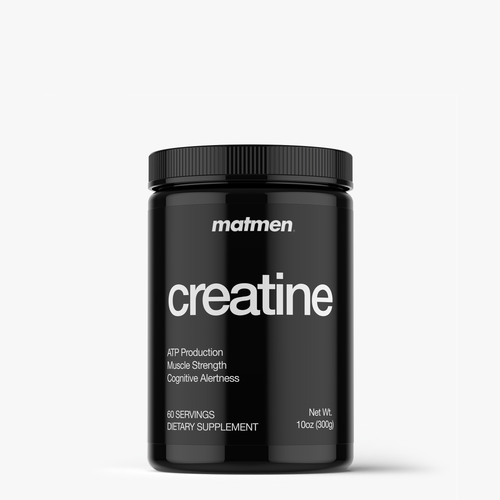
Stack it sensibly. It plays well with creatine and with the basics covered in our pre workout for BJJ breakdown. Skip the proprietary blends with 14 ingredients at fairy dust doses. One ingredient at a real dose beats a label full of maybes.
And manage expectations. If a product promises veins like a road map and three extra rounds of cardio, put it back on the shelf. Nitric oxide support is a small, real edge. Small real edges are what legitimate supplementation looks like.
So are nitric oxide supplements worth it
If you're training hard, competing, or grinding through camps where recovery between sessions is the limiting factor, arginine is one of the more sensible things to have in the rotation. It's cheap relative to the exotic stuff, it's one of the most studied amino acids there is, and it supports a system your body is already running every second of the day.
If you barely train twice a week, spend the money on more mat time first. The supplement works best for the athlete who's already doing the work. Blood flow serves training. It doesn't replace it.
This article is for informational purposes only and is not medical advice. Talk to a healthcare professional before starting any supplement.