


Ask any grappler who's been training more than a few years and they'll have a list. The knee that clicks. The rib that never quite healed. The fingers that won't straighten all the way anymore. So when a supplement label promises to bulletproof your joints, it's tempting to believe it. Let's be honest about what supplements can actually do for injury prevention, what they can't, and where your money is better spent.
Short version first. No capsule will save you from a heel hook you didn't tap to. But the right supplements can keep the tissue you train with healthier, support the recovery that lets your body adapt instead of break down, and cover the nutritional gaps that quietly make you more fragile than you should be. That's a real contribution. It's just smaller than the marketing suggests.
Where injuries actually come from
Most grappling injuries trace back to a few unglamorous causes. You stayed in a bad position too long because your ego wouldn't let you tap. Your training load jumped faster than your tendons could adapt (tendon and ligament tissue adapts much more slowly than muscle, which is why three-a-days feel fine for weeks and then suddenly don't). You trained exhausted, your reaction time dropped, and you got caught in something you'd normally escape. Or plain bad luck, a knee meets a skull in a scramble.
Notice that none of those are nutrition problems. That's why the foundation of injury prevention is boring. Manage your training load so hard sessions are followed by easier ones. Tap early and often. Warm up properly. And sleep, because sleep deprivation is one of the best-documented predictors of athletic injury. We wrote a full breakdown of that in our guide to sleep and BJJ recovery, and if you only fix one thing this year, make it that one.
Once those are handled, supplements are worth talking about. Here's what has a real case behind it.
Supplements with a real case for injury prevention
Omega-3s for tissue quality and inflammation. Hard training creates inflammation, and chronic low-grade inflammation slows tissue repair. The omega-3 fats EPA and DHA in fish oil help regulate that inflammatory response, and research suggests they support joint comfort and may help maintain muscle during periods of reduced training, like when you're stuck resting an injury. Most grapplers eat nowhere near enough oily fish to cover this from diet alone.
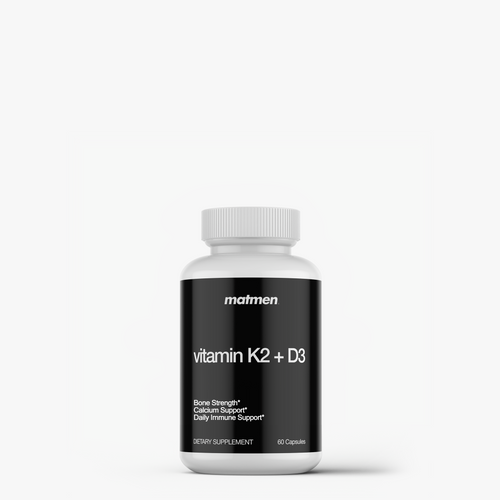
Vitamin D3 and K2 for bone. Your skeleton takes a beating in grappling, and stress reactions and breaks happen more easily when vitamin D is low. That's not rare, either. Athletes who train indoors (which describes basically everyone on the mats) are commonly deficient. D3 helps you absorb calcium, and K2 helps direct that calcium into bone rather than soft tissue, which is why D3 and K2 together make sense as a pair. If you train in a gi in a windowless academy and live somewhere with real winters, this one is close to a no-brainer.
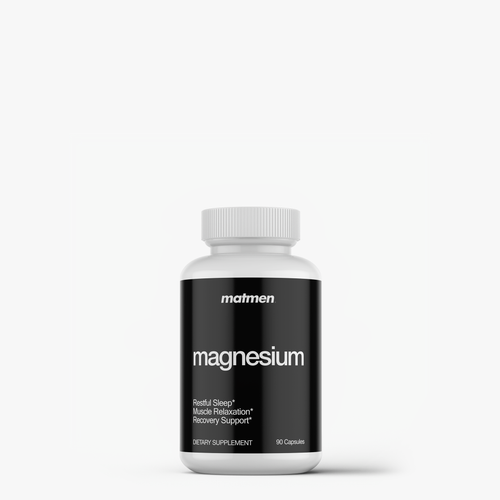
Magnesium for cramps, sleep, and stressed muscles. Sweaty sessions drain magnesium, and low magnesium shows up as cramping, twitchy muscles, and worse sleep. A cramping muscle mid-roll is a small injury risk on its own, and poor sleep is a big one, so magnesium glycinate taken in the evening quietly supports both ends of the problem.
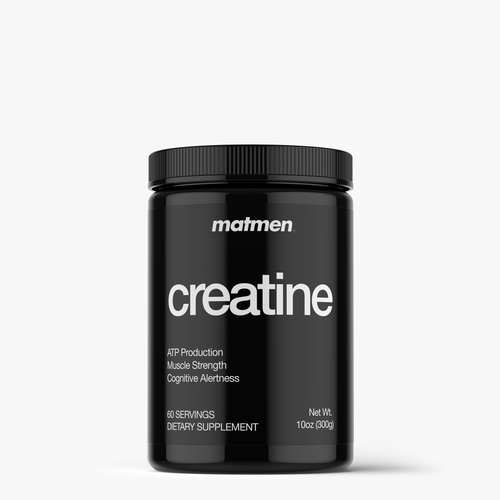
Creatine for the muscle that protects you. Strong muscle is armor. It stabilizes joints, absorbs force, and gives you the strength to fight out of compromising positions instead of getting crushed in them. Creatine monohydrate is the most studied supplement in sports for building and keeping that muscle, and some research in team-sport athletes suggests creatine users experience less cramping and muscle strain than expected. Cheap, safe, boring, effective.
Turmeric and ginger for managing the grind. This pair won't prevent an injury directly, but turmeric with ginger can help take the edge off achy joints and training soreness, and an athlete who isn't compensating around a cranky elbow moves better and gets hurt less. We covered the joint side of this in more depth in our post on joint pain from jiu-jitsu.
What's mostly marketing
Plenty of products are sold on injury prevention with thin evidence behind the pitch. Proprietary "joint blends" that sprinkle ten ingredients at doses too small to matter. BCAAs, which do almost nothing if you already eat enough protein. Anything promising to "repair" ligaments from a capsule. And no supplement compensates for training through pain that's getting worse week over week. That's not toughness, that's how a six-week problem becomes a six-month one.
One honest caveat on protein. It isn't flashy enough to market as injury prevention, but chronically under-eating protein absolutely makes you easier to injure and slower to heal. Get roughly 1.6 to 2.2 grams per kilogram of bodyweight per day from food first. Supplements sit on top of that, never instead of it.
Putting it together
If you want a sane injury-resilience setup, it looks like this. Sleep 7 to 9 hours. Lift at least twice a week, because strong tissue is resilient tissue. Manage your training spikes. Eat enough protein and enough food generally. Then add the handful of supplements above, consistently, for months rather than days, since tissue quality changes slowly. None of it is exciting. All of it beats whatever the flashiest label at the expo promised you.
And keep perspective. The cheapest injury prevention in the sport is still the tap.
This article is for informational purposes only and is not medical advice. Talk to a healthcare professional before starting any new supplement.