


Everyone wants a better guard. Almost nobody wants to stretch for it. But watch the people in your gym who are hard to pass. Their hips move. They shrimp without thinking, their knees fold to their chest under pressure, and they recover guard from positions that would flatten you out. That's not talent. Most of the time it's range of motion, built a little at a time.
The good news is you don't need an hour of yoga a day. Ten focused minutes of hip mobility work, done daily, beats a long session you only do when something hurts.
Why hip mobility decides your guard game
Closed guard, butterfly, half guard, inverting to recover. Every one of those positions asks your hips for something. External rotation to keep knees wide in butterfly. Hip flexion to bring your knee across in knee shield. Deep flexion plus rotation to get under someone for a sweep.
When the range isn't there, your body borrows it from somewhere else. Usually your lower back. That's why stiff hips so often show up as back pain after long guard sessions. If that sounds familiar, we covered the hip side of that problem in our post on hip pain from BJJ.
There's a defensive cost too. A guard passer only needs to control your knees for a second. If your hips can't fold and swivel fast, that second is easy to find.
Ten minutes a day beats an hour on Sunday
Connective tissue adapts slowly. It responds to frequency, not heroics. A short daily dose tells your hips this range matters, keep it available. One long weekend session followed by six days of sitting at a desk tells them the opposite.
So the plan is simple. Pick a handful of positions, hit them every day, and don't chase pain. Mild stretch, steady breathing, two minutes at a time. If you're shaking or holding your breath, back off.
The daily hip mobility work worth doing
Here's a routine that covers the ranges BJJ actually uses. Run through it once a day, about ten minutes total.
90/90 sits, 2 minutes each side. Front leg bent 90 degrees in front of you, back leg bent 90 degrees behind. Sit tall, then lean over the front shin. This trains internal and external rotation at the same time, which is exactly what pummeling your legs through half guard demands.
Deep lunge with a twist, 1 minute each side. Long lunge, back knee down, both hands inside the front foot. Then reach one arm to the ceiling. Opens the hip flexors on the back leg, which get short from sitting and from every top position you've ever held.
Pigeon or figure four, 2 minutes each side. Front shin across the mat, chest draped over it. If pigeon bothers your knee, lie on your back and cross one ankle over the other thigh instead. Same target, friendlier angle. This is the big one for guard retention since it builds the external rotation that keeps your knees between you and the passer.
Deep squat hold, 2 minutes. Feet about shoulder width, sink to the bottom, heels down. Hold onto something if you need to. Wiggle around down there. The bottom of a squat is basically open guard posture flipped upright.
That's it. No equipment, no warm up needed if you move in gently. Do it while your coffee brews or right after training while you're still warm. If you want a full body version, our BJJ mobility routine covers shoulders and spine too.
Make the new range stick
Passive stretching opens the door. Strength keeps it open. Once a position starts feeling easy, add light load or active work. Lift the front leg off the floor in your 90/90. Pause three seconds at the bottom of each squat. Cossack squats, slow and controlled, are worth their weight here.
The principle is simple. Your nervous system grants range it trusts. Prove you can control the position and it stops fighting you there.
What recovery has to do with it
Mobility work is still work, and tissue adapts between sessions, not during them. The basics carry most of the load. Sleep enough. Eat enough. Stay on top of hydration.
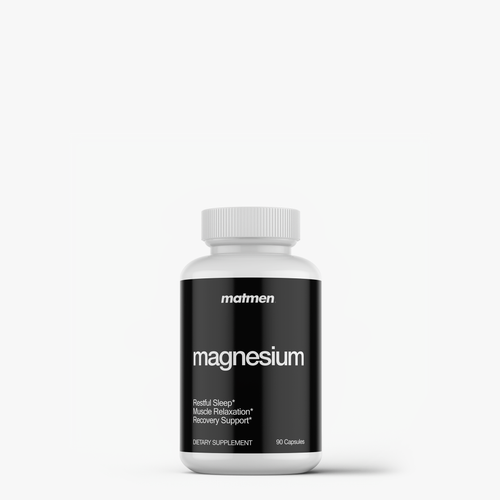
Supplements play a supporting role at best, but a few fit here. Magnesium Glycinate supports normal muscle function and relaxation, which matters when you're asking tight hips to let go. And if your hips feel achy rather than just stiff after hard rounds, Turmeric + Ginger supports a normal inflammatory response while you keep training.
One caution. Stiffness that's sharp, pinchy, or lives deep in the front of one hip isn't a flexibility problem. Pushing stretches into that kind of signal makes it worse. Get it looked at.
Give it eight weeks
Hip mobility comes back slower than cardio and faster than you'd think. Most people feel a difference in guard retention within a few weeks of daily work. The ones who keep going are the ones who attached it to a habit they already had.
Ten minutes. Every day. Your guard will thank you, and so will your lower back.
This article is for informational purposes only and is not medical advice. Talk to a healthcare professional before changing your training or supplement routine.