





Intermittent fasting is everywhere right now. Half your gym swears by it, the other half thinks skipping breakfast will melt your gains. If you train jiu-jitsu, the question is more specific than the internet makes it. Can you push through a hard night of rounds when you haven't eaten since yesterday, and should you even try?
Short answer: some grapplers do fine with it, some fall apart completely, and the difference usually comes down to when you train, how hard you train, and what you're actually trying to get out of it. Let's walk through it like training partners, not influencers.
What intermittent fasting actually is
Intermittent fasting is an eating schedule, not a diet. The most common version is 16:8. You eat all your food inside an 8 hour window, say noon to 8pm, and fast the other 16 hours. Nothing about the fast itself is magic. Most of what people get from it comes from a simpler place. When you only have 8 hours to eat, you tend to eat less. Fewer snacks, fewer late night calories, easier deficit.
That matters for how you think about it as an athlete. If fasting helps you control intake without feeling like you're dieting, it's a useful tool. If you're already training six days a week and struggling to eat enough, it's a tool you probably don't need.
Training BJJ during a fast
Here's where grappling is different from the morning jog that fasting influencers are usually talking about. Easy cardio runs mostly on fat, and your body handles that fine in a fasted state. Hard rounds don't work that way. Scrambles, takedowns, and defending bad positions are repeated near maximal efforts, and those run on glycogen, the carbohydrate your muscles have stored from previous meals.
Train light and technical while fasted and you'll probably feel fine. Maybe even sharp. But when the room heats up and you're going live round after round, a 14 or 16 hour fast starts to show. The gas tank empties faster, your grips fade earlier, and the mental lapses show up sooner. Research suggests high intensity performance drops when glycogen runs low, and almost every grappler who has trained hard deep into a fast has felt exactly that.
Where intermittent fasting helps grapplers
The honest case for it is weight management. If you walk around heavier than you'd like and every cut turns into a miserable last week, eating inside a window can keep your weight closer to where it needs to be year round. That makes the whole picture calmer, something we covered in more depth in our guide to safe weight cutting for grapplers.
It also suits people who just don't want breakfast. Some athletes genuinely feel better training in the morning on an empty stomach and eating after. If that's you, and your hard sessions still feel strong, there's no rule that says you have to force down oatmeal at 7am.
Where it falls apart
The schedule breaks down when your eating window and your training schedule fight each other. Noon to 8pm window with a 7pm class? Workable. You're fed, fueled, and you can still get a meal in after. Same window with a 6am class is a different story. Now you're training hard 10 hours into a fast and waiting 6 more hours to recover with actual food. That's not discipline, that's just underfueling with extra steps.
The other failure mode is eating too little without noticing. Hard BJJ training plus a shrunken eating window can quietly leave you short on calories and protein for weeks. The signs creep in. Flat rounds, slow recovery, getting sick more often, strength sliding down. If that picture sounds familiar, the fasting window is working against your training, not with it.
How to make intermittent fasting work with BJJ
First rule: build the window around training, not the other way around. Best case, your session sits inside or right at the end of your eating window, so you train fed and eat a real meal after. What that pre training meal should look like is its own topic, and we broke it down in what to eat before BJJ.
Second, protect protein. Hitting your daily protein target inside 8 hours takes intention. Front load it, anchor every meal around it, and don't let the window turn into two snacks and one giant dinner.
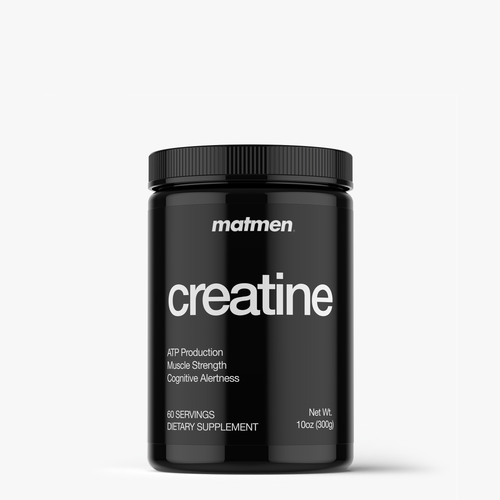
Third, supplements still fit. Creatine doesn't care about meal timing, so take it whenever it's consistent, water is fine during the fast. Omega-3 absorbs best with food, so pair it with your first meal. And if hard training plus fasting has your sleep or your muscles feeling twitchy, magnesium glycinate in the evening is an easy win. During the fast itself, water with a pinch of salt goes a long way in a sport that sweats as much as ours.
Fourth, keep the hardest sessions fed. If Tuesday night is the shark tank, that's not the day to experiment with a 16 hour fast. Save fasted training for drilling days and flow rounds.
The bottom line
Intermittent fasting and BJJ can coexist, but fasting is the junior partner. It's a scheduling tool that helps some grapplers manage weight and feel better, and it earns its place only when your performance holds. Train hard on an empty tank often enough and the mats will give you your answer. If your rounds are strong, carry on. If they're flat, eat. Nobody taps you out slower because you skipped breakfast with discipline.
This article is for general information only and is not medical advice. Talk to your doctor before making changes to your diet or supplements.