




Ask five training partners how much protein they eat and you'll get five different numbers. Most of them are guesses. That's a problem, because protein is the one part of your diet that decides whether hard rounds turn into progress or just soreness. You break muscle down every session. Protein is how you build it back.
Why grapplers need more protein than the average lifter
A typical gym goer lifts three times a week and goes home. You're hitting takedowns, fighting grips, bridging out from under side control, and probably lifting on top of all that. Grappling is full-body resistance work against someone who's actively trying to fold you. The damage adds up faster than it does for most people, and so does the repair bill.
There's a second reason. Most grapplers spend part of the year in a calorie deficit, whether they planned it or not. Cutting for a tournament. Eating light before class. Skipping lunch on a busy workday. When calories drop, your body gets more willing to burn muscle for fuel, and a higher protein intake is the main thing that protects you there.
How much protein per day
Research suggests athletes in hard training do best somewhere between 1.6 and 2.2 grams of protein per kilogram of bodyweight per day. In pounds, that's roughly 0.7 to 1 gram per pound. A 170 pound grappler lands around 120 to 170 grams a day.
Two things stand out about that range. First, the low end is already close to double what's recommended for people who don't train. If you've been eating like a regular person while rolling five or six days a week, you're probably under. Second, the high end isn't magic. Going past a gram per pound won't hurt you, but the extra doesn't buy much either. Pick a number inside the range that you can hit every single day. Consistency beats precision here.
Training into your late thirties and beyond? Err toward the top of the range. Older muscle responds a little less to each meal, so it pays to give it more to work with.
Timing is simpler than the internet makes it
The old anabolic window panic, where you had thirty minutes after training to slam a shake or lose your gains, didn't survive better research. Your daily total matters far more than the clock does.
That said, distribution helps. Three to five feedings of 25 to 40 grams each will serve you better than one giant dinner after an empty day. Your body can only use so much building material at once, and steady supply keeps recovery ticking between sessions. Getting some protein within a couple hours after training is still a good habit. Just not an emergency.
One spot people miss is the last meal of the day. Something slow digesting before bed, like cottage cheese or Greek yogurt, gives your body material to work with overnight, which is when a lot of repair actually happens.
Hitting your number with real food
You don't need powder to get there, but you do need a plan. Eggs, chicken thighs, ground beef, canned tuna, sardines, Greek yogurt, cottage cheese, lentils. Build each meal around one of those and the math mostly takes care of itself. A palm sized portion of meat or fish runs 25 to 35 grams. Three of those plus a high protein snack puts most grapplers at their number.
Protein powder is a convenience, not a requirement. If your schedule makes real meals hard, a shake fills the gap. If you eat well already, it's just an expensive flavor.
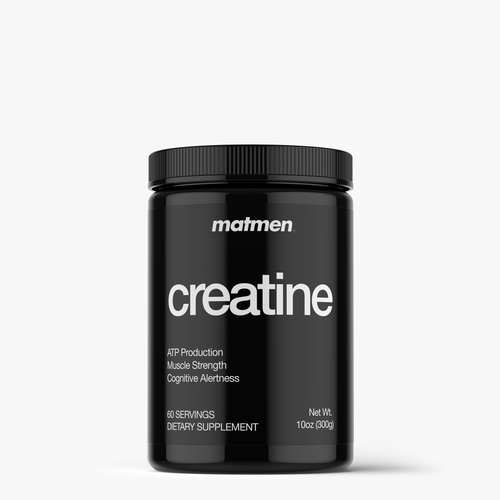
Where supplements actually earn a spot is next to your protein, not instead of it. Creatine is the obvious one. Protein gives your body the raw material, creatine helps you produce the repeated hard efforts that make the stimulus worth recovering from. They do different jobs, and they work well together.
Protein when you're cutting weight
When calories drop for a cut, protein matters more, not less. Push toward the top of the range and let carbs and fat take the hit instead. That protects the muscle you spent all camp building, and protein is also the most filling thing you can eat, which makes the whole cut less miserable.
We've covered the creatine side of this in creatine and weight cutting. And competition day itself is a different problem, more about carbs and timing than protein, which we walked through in competition day nutrition.
The short version
Shoot for 0.7 to 1 gram per pound of bodyweight, every day, spread over three to five meals. Lean on whole foods, use a shake when life gets in the way, and push intake higher when you're cutting or when you're training hard past 35. None of it is complicated. It just has to happen daily, same as showing up to class.
This article is for informational purposes only and is not medical advice. Talk to your doctor before making changes to your diet or supplements.