





Nobody signs up for jiu-jitsu because they love taking days off. You want to be on the mats, and every day you skip feels like a day your training partners get better without you. But here's the thing most grapplers figure out too late. The training doesn't make you better. Recovering from the training does. Rest days are where your body actually cashes in the work you put in during the week.
Why rest days make you better at jiu-jitsu
Hard rolling breaks you down. Muscle fibers tear, glycogen runs low, connective tissue takes a beating, and your nervous system racks up fatigue you can't always feel. Adaptation happens afterward, when you're sleeping and eating and not getting crushed under someone's knee on belly. Skip the recovery window and you just stack damage on top of damage.
That's not a theory. It's the whole reason overtraining symptoms show up in grapplers who train seven days a week for months. Sleep gets worse, grips feel weak, cardio drops, small injuries stop healing, and you start getting tapped by people you usually handle. If that list sounds familiar, the answer isn't another training session.
How many rest days do BJJ athletes actually need
There's no magic number, but a few honest guidelines hold up for most people.
Training 3 to 4 days a week. You've already got built-in recovery. One full rest day is usually plenty, and your off days between sessions do the rest of the work.
Training 5 to 6 days a week. Take at least one full rest day, and make one more day genuinely easy. Drilling, positional flow, technique study. Not a 90 minute shark tank.
Training twice a day or in competition camp. You need a full rest day every week, no exceptions, and probably a lighter deload week every 4 to 6 weeks. The higher the volume, the more recovery becomes the limiting factor.
Age matters too. If you're in your late 30s or beyond, recovery simply takes longer than it did at 22. Older grapplers usually do better with more rest days, not more toughness.
Signs you're not taking enough rest days
Your body tells you before it forces you. Resting heart rate creeping up in the morning. Needing caffeine just to feel normal. Getting sick every few weeks. Nagging joints that never quite settle down. Zero drive to train, which for most of us is the strangest feeling in the world. Any one of these can happen in a normal hard week. Two or three at once, for more than a week, means you're behind on recovery and the smartest move you can make is a couple of easy days.
What a good rest day actually looks like
Rest doesn't mean lying motionless in a dark room. For most grapplers, easy movement beats total shutdown. A walk, light mobility work, some stretching, maybe an easy swim. Blood flow helps sore muscles clear out waste products and brings nutrients in. Keep the effort low enough that you could hold a conversation the whole time.
The bigger levers are boring and unbeatable. Sleep is the most powerful recovery tool you have, and it's not close. If your rest day includes a late night out, you didn't really take a rest day. We broke down why in sleep and BJJ recovery. Eat like you're rebuilding, because you are. Protein at every meal, plenty of carbs to refill glycogen, and real food over whatever's fastest.
Supplements don't take rest days
A common mistake is treating supplements as training-day-only tools. Most of the ones worth taking work by keeping your baseline topped up, which means consistency matters more than timing.
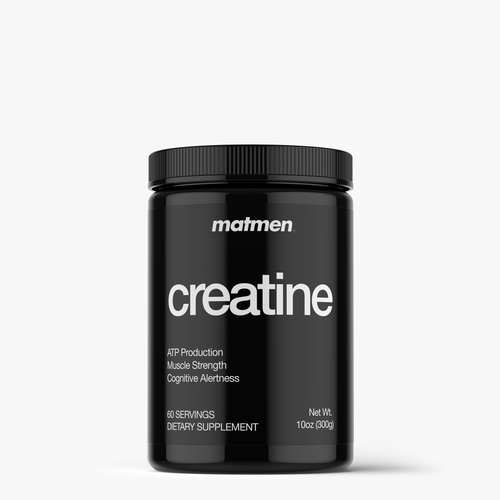
Creatine monohydrate is the clearest example. It works by saturating your muscles over weeks, so you take the same dose on rest days as training days. Skipping off days just slows the process down.
Magnesium is another one that earns its spot on a rest day. It supports muscle relaxation and sleep quality, which is exactly what you want when the goal is recovery. A dose of magnesium glycinate in the evening fits a rest day as well as any training day.
Omega-3 rounds it out. Research suggests EPA and DHA support a healthy inflammatory response, and that process is running full speed on the days after hard rolling, whether you train or not.
Make rest a skill, not a punishment
The grapplers with the longest careers treat recovery like part of the program, not a failure of discipline. Put your rest day on the schedule the same way you schedule training. Guard it. Use it to sleep, eat, move a little, and let your body do the adapting you paid for on the mats. You'll come back sharper, and the people who never rest will wonder how you keep improving.
This article is for informational purposes only and is not medical advice. Talk to your doctor before making changes to your training or supplement routine.