



You dragged yourself off the mats, drove home, and now you're staring into the fridge with no plan. Sound familiar? Most grapplers put real thought into their pre training meal and then wing it after class, which is backwards. The hours after training are when your body does the actual rebuilding. We already covered what to eat before BJJ. This is the other half.
Why the post training meal matters so much
Hard rolling drains muscle glycogen, breaks down muscle tissue, and leaves you a pound or two lighter in sweat than when you walked in. Nothing you ate before class fixes any of that. The repair work happens afterward, and food is the raw material. Skip it or phone it in and you show up tomorrow flat, sore, and weak on your grips.
The good news is you don't need anything exotic. Protein, carbs, fluids, and a little consistency. That's the whole game.
What to eat after BJJ in the first two hours
The old idea of a 30 minute anabolic window has softened a lot. Research suggests the window is closer to a few hours, so you don't have to sprint to a shaker the second class ends. Sooner still beats later, though, especially if you train again within 24 hours.
A solid post training plate is simple. A palm or two of protein, a fist or two of carbs, something green, and plenty of fluids. Chicken, rice, and broccoli. Eggs and potatoes. Ground beef and pasta. Greek yogurt with fruit if it's late and you want something lighter. The simple meal you'll actually make beats the perfect meal you won't.
Protein does the heavy lifting
Aim for roughly 30 to 40 grams of protein in that first meal. That's enough to get muscle repair moving for most athletes. Bigger guys, or anyone coming off a two hour session with hard sparring, should lean toward the top of that range. We broke down daily targets in protein needs for combat athletes if you want the full picture.
And don't treat carbs like the enemy. They refill the glycogen you just burned, which is what lets you push pace again tomorrow instead of surviving on grit. If you train most days of the week, carbs after training are how you keep intensity up across the whole week, not just one class.
What to eat after BJJ at night
Plenty of classes end at 9 or 10 pm, and nobody wants a full chicken dinner at that hour. Go lighter, but don't go to bed empty. A protein shake and a banana. Greek yogurt with berries. Cottage cheese and toast. Eating too little after night training is one of the most common reasons grapplers wake up sore and stay sore.
Evenings are also where Magnesium Glycinate earns its spot in the routine. Taken before bed, it supports muscle relaxation and sleep quality, and sleep is where the real recovery gets done. Hard training runs down magnesium through sweat, so grapplers have more reason than most to pay attention to it.
Where supplements fit into the picture
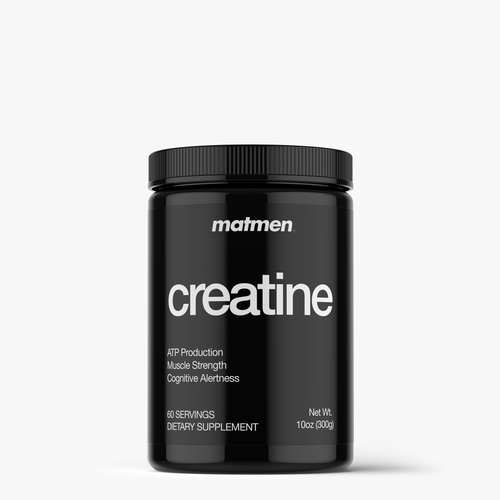
Food first, always. But a few things make the routine easier to repeat. Creatine Monohydrate is the most studied supplement in sports, and after training is as good a time as any for your daily 5 grams, since consistency matters far more than timing. Omega-3 supports normal joint function and recovery during heavy training blocks, and most grapplers don't get enough fatty fish to cover it with food alone.
A whey shake with fruit isn't really a supplement so much as fast food that works. When your appetite is dead after hard rounds, it covers protein and carbs in two minutes and you can eat a real meal later.
Keep it boring and repeatable
The grapplers who recover well aren't eating anything special. They rotate the same two or three post training meals all week, they drink fluids through the evening instead of chugging once, and they don't skip eating just because class ran late. Boring wins here.
One easy check. Weigh yourself before and after training a few times. If you're consistently down two pounds or more after class, that's mostly fluid, and it means your evening should include more water and salted food than you think.
Sort out the plate first, keep the routine repeatable, and the soreness that used to follow you into Thursday starts fading by Wednesday morning.
This article is for informational purposes only and is not medical advice.